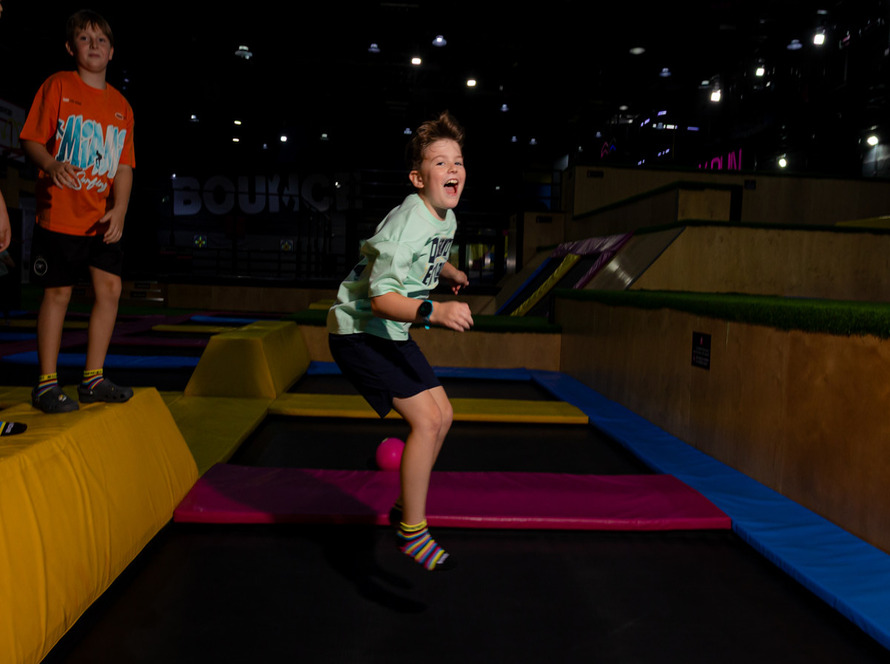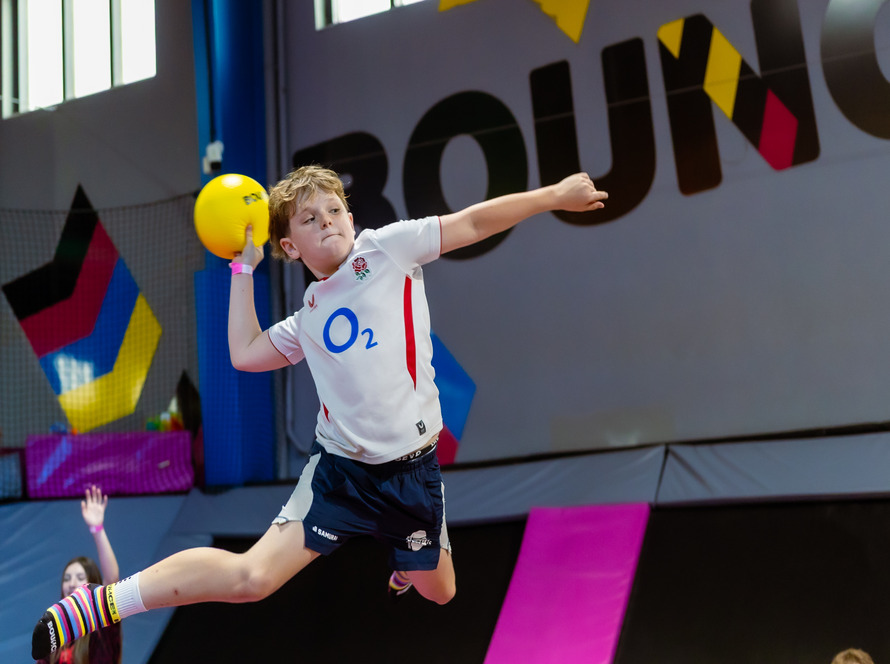

Every BOUNCE Park has a certain moment that happens multiple times a day. A child stands at the edge of the foam pit and looks down, but does not jump, not instantly. They observe another person going first. They stare at a parent while shuffling forward and backward. But when they leap, and finally emerge from the foam. Their face expresses everything at once: a mixture of disbelief and absolute pride.
It might be a tiny moment for some, yet it’s enormous for that child. And it happens because, more than most hobbies, trampolining exposes them to something truly difficult, doing something they are afraid of.
What Physical Courage Actually Looks Like in Children
Children typically don’t exhibit courage in dramatic situations. They truly perform in small choices made in real time, such as whether to tackle the obstacle course or stay on the open court, whether to try a jump they haven’t landed before, or whether to try again after a fall, are examples of how it manifests. Confidence is developed by these micro-decisions, which are made numerous times in a single session. It is neither taught nor told but is built through repetition and little victories.
Trampolining accelerates confidence because the environment is inherently forgiving. If you make a mistake, you end up in a foam pit instead of getting wounded. Brave attempts occur in the space between perceived and real risk. Children will try things on a trampoline that they would never try on solid ground because the math works differently in their brains.
The Link Between Movement and Self-Belief
Children’s overall confidence and physical confidence go hand in hand. When a child learns they can launch themselves into the air, make a successful landing, or finally execute the wall-run they’ve been trying for three consecutive trips, they carry that information throughout the day. It might sound insignificant, but to them it isn’t.
Physical mastery, or the experience of doing something difficult with your body and succeeding, is frequently linked in child development research to broader self-efficacy, the belief that effort leads to outcomes. Children who develop that belief early on typically address obstacles in different ways, whether it’s a new subject at school or a social scenario that makes them anxious. The confidence has nothing to do with trampolining; they simply learn it while trampolining.
Failure Is Part of The Design,
Most of the situations that kids encounter are designed to minimize failure. Scaffolded learning is used in schools, and coaches keep a careful eye on athletes. At home, play is typically safe and self-directed. But, in trampolining parks, children try things, fail, try again, fail again, pause, observe, try another strategy, and eventually succeed. Or even if they don’t, they return later with another plan to succeed.
It is beneficial for kids to go through the cycle of trying, failing, resetting, and trying again in an environment where their pride is the only thing at stake. There’s a purpose to the foam pits, as the whole point is the soft landings.
Different Kids Find It Differently
On the first day, not every child launches themselves into the foam pit. Before moving further, several children spend most of their first visit on the open court, getting used to the feeling of the trampoline underfoot. That’s precisely how confidence grows.
BOUNCE was designed this way so that no child would miss their initial steps. Younger children can experience a scaled environment with equipment that matches their size and skill level in the miniBOUNCE zones. Freestyle Academy provides older kids with structured coaching to help them develop specific skills with real progression. The open park gives everyone the chance to move at their own pace. There’s no pressure, no ranking, no performance, just kids deciding for themselves what to try next.
Why Does It Matter More In Summer?
Kids spend months indoors due to the UAE summer. Physical exercise declines, screen time increases, and passive entertainment takes the place of the kind of unstructured movement that children naturally seek out. A few hours spent at BOUNCE gives children the kind of physical, effortful experience that screens simply can’t replicate. On the way home, they experience the good kind of tiredness. The type that comes from having genuinely done something.
Come In And See It Happen
Bring a child who is nervous about trying new things once, and come back after three weeks. The difference, you’ll see, is usually obvious and always worth watching.
BOUNCE has locations across Dubai, Abu Dhabi, and Sharjah. Book your session today!