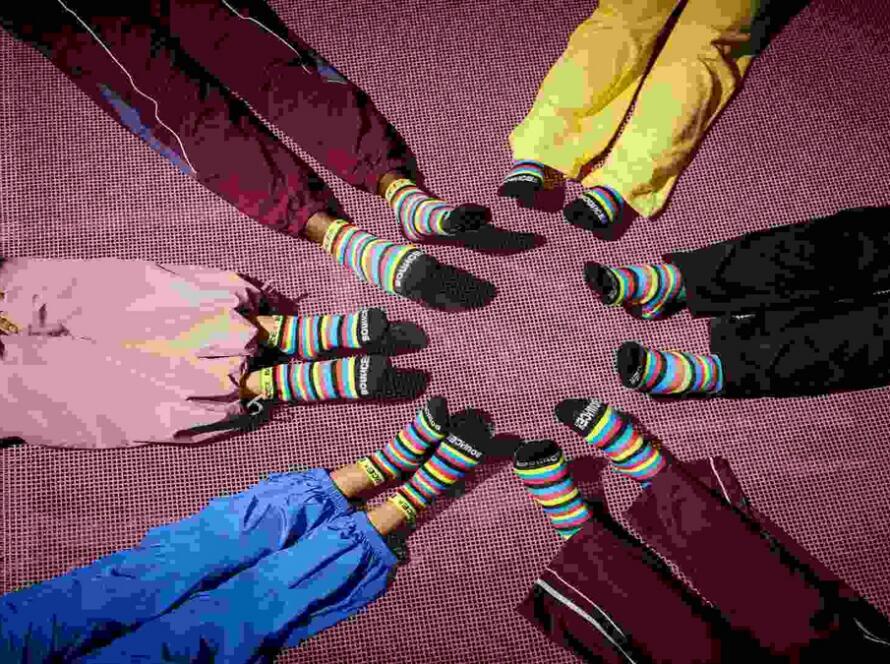

You only need about thirty seconds. Watch a kid hit a trampoline and it lands right in your chest – pure, uncomplicated joy. Arms everywhere, hair doing its own thing, that big daft grin, and a laugh they can’t switch off. Nothing else exists for them in that moment. They’re just in it.
What’s harder to spot is everything going on under the surface. While they’re having the best time of the week, their bones are getting stronger, their lymphatic system is getting a proper workout, and their brain is firing off all the good stuff; the chemicals that sort out mood, focus and sleep.
That’s the magic of it: real, measurable benefits riding shotgun with full-volume, no-strings fun. Here are 10 science-backed reasons jumping is one of the best things your kid can do, and barely notice they’re doing it.
1. One of The Best Cardio Workouts They’ll Actually Do
Here’s the stat that gets people: ten minutes on a trampoline works the heart about as hard as thirty minutes of jogging. With kids, the exercise was never the hard part; getting them to want to do it was. Trampolining sorts that out without a single argument. And heart-healthy habits built in childhood tend to stick for life, so this is one of the easiest ways to start building them early.
2. Jumping Builds Stronger Bones
Bone density mostly locks in by the early twenties, which makes the years before that count. Bones get stronger when you load them, not damage them, and that’s exactly what weight-bearing movement does. Every landing on a trampoline loads the bones with just enough force to tell them to grow, while the surface soaks up the shock that would otherwise hammer little joints. Gentler than pounding pavement, harder-working than swimming. For kids in their prime bone-building years, that’s the sweet spot.
3. Balance and Coordination Get a Serious Workout
A trampoline surface is never quite still, so the brain and body have to talk to each other constantly; adjust, correct, recalibrate, repeat. Just landing cleanly and upright gives the cerebellum, the part running coordination and spatial awareness, a real session. It’s why regular jumpers tend to level up fast in other sports too: football, gymnastics, skateboarding, and martial arts. They all run on body awareness, and trampolining trains it on a loop.
4. Core Strength, No Sit-ups Required
Staying upright in mid-air means the core never really switches off. Abs, obliques, lower back – all firing, all the time, and your kid has no idea it’s happening. Strong core muscles quietly hold up almost everything else: better posture, fewer injuries, more control. An hour of jumping does more for functional core strength than most kid ‘workouts’, and it’s about a thousand times more fun.
5. It Gives the Immune System a Hand
The lymphatic system clears waste and helps keep illness at bay, but it doesn’t have its own pump, it moves when you move. That up-down, weightless-then-grounded rhythm of rebounding is one of the best ways to get it flowing. More lymph flow means white blood cells reach where they’re needed faster and waste clears out quicker. Translation: a kid who jumps regularly might just spend a little less time off sick.
6. Mood Goes up, Fast
Everyone knows exercise releases endorphins. But trampolining has a trick up its sleeve. It’s actually fun. The body isn’t grinding against resistance, it’s being launched through the air, and the brain clocks the difference and tends to reward it with a bigger mood lift than your average workout. Regular movement helps kids feel less anxious and less low and jumping gives them somewhere to dump the pressure of school, friendships and everything else. Most parents notice it after one session: calmer at dinner, easier to wind down, sleeping better.
7. It Helps Kids Focus
Exercise boosts blood flow to the brain and ramps up BDNF, a protein that helps build new neural connections. The payoff for focus is real and measurable. For kids with ADHD, the full-body, rhythmic nature of trampolining is a particularly good fit. It burns off the restless energy that makes sitting still feel impossible, while the coordination demands give the brain something solid to lock onto. A lot of kids come off the trampoline noticeably more settled. Teachers and parents who work jumping into the routine often report longer focus, fewer meltdowns and smoother homework.
8. Motor Skills Develop Faster
Proprioception is your body’s sense of where it is in space the thing that lets you catch a ball without staring at your hands or move through a dark room without face-planting. Trampolining trains it hard. Every jump, the nervous system is deciding how high, which way and how to land, and over time it gets quicker and sharper at all of it. Kids with strong proprioception pick up new sports faster, take fewer tumbles, and move with more confidence.
9. Confidence Builds With Every New Skill
There’s a specific kind of confidence that comes from nailing something physical that felt impossible last week. Trampolining has a natural skill ladder; basic jumps, seat drops, twists, eventually flips, and every rung-up hands a kid a small, real hit of ‘I did that.’ The brain files it away: turns out practice actually works. And that lesson doesn’t stay on the trampoline. In structured settings like BOUNCE’s Freestyle Academy where trying, missing and trying again is just part of the deal that resilience gets built on purpose. It’s not just a physical skill. It’s a mental one.
10. It’s Social In a Way Most Exercise Just Isn’t
Kids don’t jump in silence. They talk, they dare each other, they cheer, they copy the trick the bigger kid just pulled. Running laps isn’t social. Drills aren’t social. Jumping together absolutely is. That constant back-and-forth is how real friendships get made. It builds turn-taking, sharpens communication, and it’s one of the only physical spaces where kids of different ages, sizes and backgrounds just play together, no problem.
This is the part we’re a little obsessed with. Because at BOUNCE, that’s the whole point. It’s not just exercise, it’s somewhere to show up, find your people and make the kind of memory that ends up in the group chat. This is Social.
11. So…. Is There a Catch?
Honestly? No. Trampolining is about as low-impact and high-return as kids’ activities get, and we’ve yet to meet the child who’s annoyed about being booked in for a session. In the UAE, where summers run long and outdoor time has real limits, having an indoor option that delivers this much.
Every session at BOUNCE is built to give kids room to move, push themselves at their own pace, and leave feeling better than when they walked in. Open jump, a Freestyle Academy session, or a birthday party that quietly doubles as a workout, the benefits show up either way. Nobody even must try.
Find your nearest BOUNCE and make the plan!